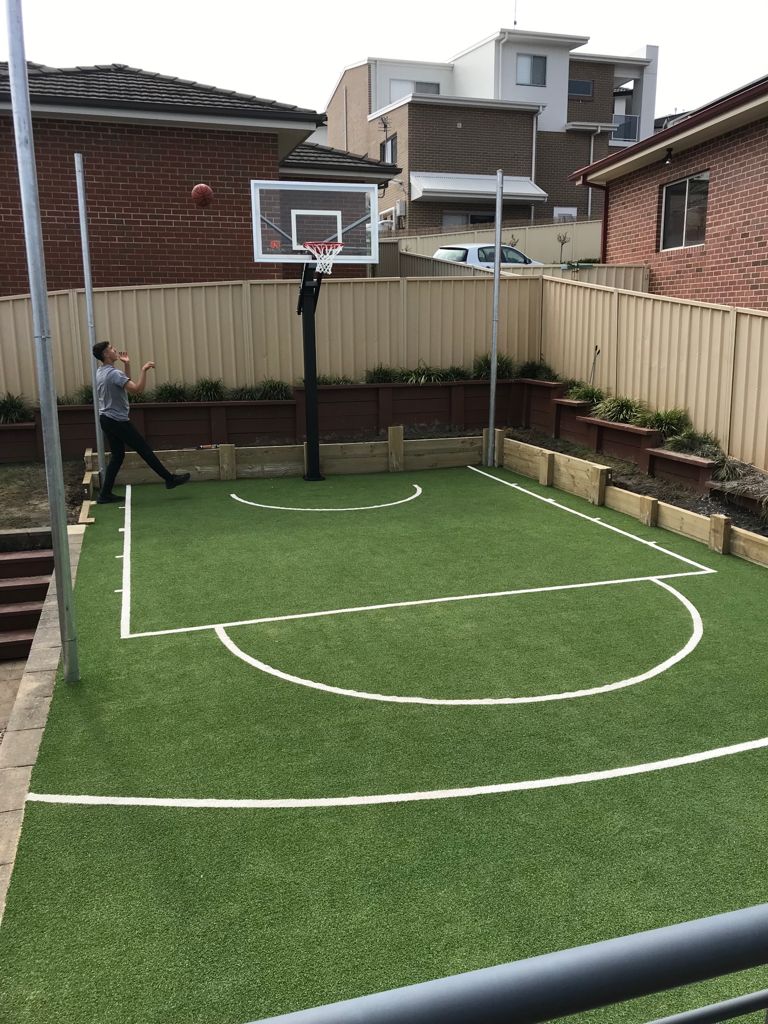
How We Install Synthetic Grass
The full install process end-to-end — site survey, ground prep, base build, turf lay, edge finishing, infill and handover. The detail that separates a premium install from a budget one.
Why the base build is 70% of the install
A synthetic lawn is only as good as the ground underneath it. Get the base right and the turf sits flat, drains properly and holds its shape for a decade and more. Get it wrong and the lawn ripples in the first year, holds water every winter, and lifts at the edges by year three. Most 'synthetic grass didn't work for us' stories are actually 'the base was shortcut' stories. We don't shortcut the base.
Below is the exact process we run on every install, residential or commercial. It's the same across Sydney, the Hills, the Shire, Wollongong and the Illawarra — only the material depths and product selection change to suit the local ground.
Site survey & quote
Before we quote, we measure
We walk the site with you, measure properly, check the soil (clay, sand, fill), assess the existing drainage, note the access route, the slope and the edges we'll have to finish against. If the job's over concrete, slab or a rooftop we assess load and permeability. The quote we write is based on that survey — in writing, itemised, final. No variation creep once the job starts.
Strip-out & excavation
Clean slate before anything new goes down
Every install starts with a proper strip-out. Existing turf is removed, along with weed mat, old pavers, construction debris or anything else the ground is hiding. We excavate the footprint to depth — 75–150mm for typical residential, 120–150mm over Hills clay or heavy-use commercial, deeper again for cricket pitches or lawn bowls greens where sub-base fall is critical.
Sub-base & drainage
Compacted aggregate graded for drainage
A compacted crushed-aggregate sub-base goes in over the excavation. We compact in two lifts rather than one — it takes longer but the base doesn't settle, so the lawn doesn't sag. Fall is graded toward existing drainage or an ag-drain we install if the site needs one. On sloped Illawarra or escarpment-side blocks we run an interceptor drain at the uphill edge to catch overland flow before it reaches the turf.
Fine bedding layer
Laser-level finish before the turf goes down
Over the compacted sub-base we lay a finer 5–10mm crushed-stone bedding layer and screed it laser-level. This is where putting greens and cricket pitches get the extra attention — both demand a perfectly flat surface. A standard residential lawn tolerates more variance, but we still work the bedding to a tight tolerance so the turf reads as one continuous plane.
Turf lay, seaming & cutting
Rolling out, fitting and invisible seaming
Turf rolls go down with the pile direction running the same way across the whole lawn — mixed pile directions look wrong in afternoon sun. Where joins are unavoidable we use pro-grade seam tape and adhesive, and run seams against the pile direction where the geometry allows so they disappear. Every perimeter edge is cut to fit the hard edge it meets — paving, masonry, garden bed edging, pool coping.
Edge fixing
The difference between a great install and a cheap one
Edge work is where most budget installs fall apart. We fix the perimeter with timber batten, composite board, masonry edge or powder-coated steel depending on what the turf meets. Every edge is mechanically fixed so the turf doesn't lift over years of foot traffic or seasonal ground movement. On pet yards and high-traffic commercial sites we spec reinforced fixing.
Infill & brush-up
Weight, stability and a natural finish
Silica sand infill is applied at the weight the job needs — more for putting greens and lawn bowls where roll speed matters, less for open residential lawn where softness is the priority. Pet installs use an antimicrobial infill that neutralises urine. Finally the pile is brushed upright with a power brush so it looks natural rather than flat-and-bagged.
Final check & handover
Documented spec, warranty and walk-through
On completion we walk the finished install with you, hand over the written install spec (product used, base depth, infill weight, warranty details), and leave you our direct contact if anything ever needs a come-back. The turf carries the 8-year Australian manufacturer warranty; our workmanship is covered separately.
What goes into the build
We don't skimp on materials and we don't hide what's in the build. Every quote lists exactly what's going in — so if anything ever needs attention years down the line, you or the next owner know exactly what's there.
Australian-made synthetic turf
UV-stabilised, 8-year manufacturer warranty. Multiple pile heights, face weights and backings depending on the use (family, pet, sport, commercial, putting green).
20mm compacted aggregate sub-base
Crushed road-base laid and compacted in two lifts for stability. Depth matched to ground type and expected load (75–150mm typical).
7mm fine bedding layer
Crushed-stone bedding screeded laser-flat over the sub-base. This is the layer the turf actually sits on; it's what controls surface flatness.
Subsoil drainage (where required)
Ag-drain or interceptor drainage added on sloped or slow-draining sites before the base goes down — especially on escarpment-side Illawarra blocks and heavy Hills clay.
Seam tape & adhesive
Pro-grade seam tape and marine-rated adhesive on every join. No gaps, no lifting edges, no visible seam lines.
Edge fixing (batten / masonry / steel)
Timber batten, composite, masonry or powder-coated steel edging matched to what the turf meets. Mechanically fixed at tight centres.
Silica sand infill
Weight tuned to the use — lighter for soft residential, heavier for putting greens and bowls. Antimicrobial variant for pet installs.
Shock pad (where required)
Certified impact-attenuating shock pad under children's play equipment, specified to AS 4422 for the required Critical Fall Height.
Site conditions we build for
Our service footprint covers a wide range of ground conditions. Here's how each typically changes the install:
Clay ground (Hills District, Western Sydney)
Deeper excavation (120–150mm), heavier compaction and more aggressive drainage fall to compensate for clay's seasonal swell and shrink.
Sandy coastal blocks (Cronulla, Northern Beaches, Shellharbour)
Over-compacted base in two lifts to stop long-term settlement. Salt-hardened turf specification for coastal UV and salt-spray exposure.
Escarpment & sloped sites (Figtree, Keiraville, parts of the Shire)
Interceptor drainage at the uphill edge, graded fall built into the base, reinforced edge fixing to hold the perimeter against gradient.
Heritage terrace courtyards (Inner West, Paddington, Glebe)
Tight-access install with hand-carried materials, shade-tolerant turf selection for low-light courtyards, detail edge work against old brick and bluestone.
Over-concrete / rooftop / slab
Permeable drainage underlay or shock-pad layer sized to the substrate and expected load. Edge work against existing paver lines or slab edges.
Bushfire Prone Areas (Sutherland Shire south, parts of Hills)
Documented material and layout spec for Asset Protection Zone compliance and certifier submission.
What you get at handover
- Written install spec: product, base depth, infill weight, edge fixing type
- Turf manufacturer warranty certificate (8 years)
- Our workmanship cover — direct contact if anything ever needs a come-back
- AS 4422 Critical Fall Height documentation (where shock pad is installed)
- Public liability insurance certificate of currency (commercial jobs)
- Care notes: how to brush, how to rinse, when to top up infill
Region-specific install detail
Each regional guide covers how we adapt the install for local ground conditions, climate and typical project types.
Get a written quote
On-site measure, full written scope, clear install spec. No obligation — we'd rather do the survey and have you decline than have you take on a job that doesn't suit.